Scammers copy your website to rob your customers. They can't spot the fake. We can.
A fake page looks just like yours and asks your customer for their password, BVN or OTP. Brandwarden watches new websites as they go online, finds the ones copying your name or logo, and shows you the proof.
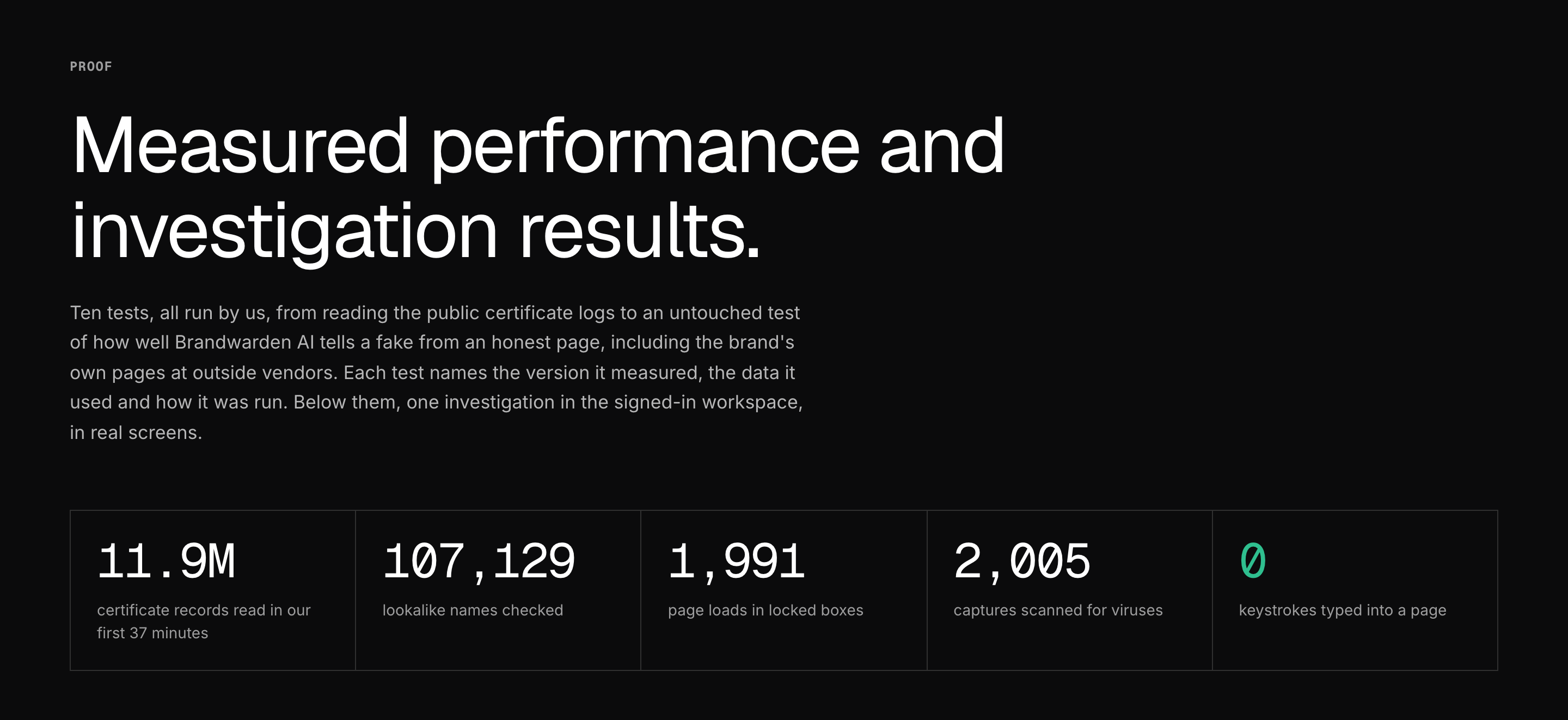
Every number on this site is measured by us, and each one shows its source.
This is your Brandwarden dashboard.
Click around. Everything here comes from one real run on Example Bank, our stand-in brand: 5,623 lookalike names checked, 7 registered, and one fake login caught and ready to report. Open the dashboard full screen.
Overview
Example Bank stands in for your brand; the data is from our own runs.- 01Lookalike Finder made 5,623 names from examplebank.comTest 2
- 02DNS check from Cape Town: 7 registered, 5,616 not registeredTest 2
- 036 split names dropped by rule: the registered part (plebank.com, ebank.com, lebank.com and others) is not close to the brandRule
- 04ex.amplebank.com kept for a page check: the registered part is close to examplebankRule
- 05Page check from Ireland: error or empty page, not a copy, closedTest 3
- 06examplebank-verify.com captured at phone size, fingerprint 33d3973d…ba38Capture
- 07Logo Match: Example Bank 0.854, next best Example Pay 0.784Test 5
- 08Threat opened: a fake login asking for BVN and OTPThreat
- 09Report pack ready, waiting for an analyst's approvalReport
One fake page is all a scammer needs.
Most website scams follow the same four steps. Brandwarden goes after the first one: the copy, as soon as it appears online.
A scammer builds a page that looks exactly like your login page, logo and all.
The link goes out by text message, WhatsApp or a social media advert.
Your customer types their password, BVN or OTP. The scammer uses them to take the money.
Your customer loses money, and your name takes the blame.
lost to digital payment fraud in Nigeria in 2025
Source: NIBSS news page
of fraud cases came from tricking people into giving away their details
Source: NIBSS figures as reported by Vanguard from a NIBSS speech
lost through internet banking, the most damaging channel
Source: NIBSS figures as reported by Vanguard
The same four steps, with and without Brandwarden.
Switch between the two. Without us, your customers find the fake first. With us, the copy is seen when its certificate is logged. Every number on the With side comes from one of our own tests.
- 01Nobody is watchingThe copy goes live
A scammer puts up a page that looks exactly like your login page. Nobody on your side knows it is there.
Who knowsOnly the scammer. - 02Customers see it firstThe link is shared
The link goes out by text message, WhatsApp or an advert. Your customers see it before you do.
Who knowsThe scammer and your customers. - 03The money is goneThe customer is robbed
A customer types their password, BVN or one time password into the fake. The scammer uses them to take the money.
Who knowsThe customer, who has already lost it. - 04You find out hereThe brand takes the blame
The customer loses money and your name takes the blame. You hear about it from the complaints.
Who knowsYou, from the complaints.
Example Bank stands in for your brand. The logo match and the fingerprint are from our own real run.
See the testsFrom a new website to a caught fake, in five steps.
Most lookalike names turn out harmless: parked, empty or someone else's business. Brandwarden checks every one and stops only the fakes.
- 01Watch
Every secure website gets a padlock certificate, and every certificate is posted in public logs. We read those logs as they grow.
- 02Find
We list the web addresses made to look like yours, from one changed letter to an added word like “verify”, and check which ones exist.
- 03Look
We open a suspect page from Lagos, the way your customer sees it, and scan every file for viruses before anyone touches it.
- 04Match
Brandwarden AI compares the page's logo and form with yours. A page that wears your logo and asks for a BVN stands out.
- 05Report
Brandwarden prepares each takedown request with the proof the registry, web host or app asks for. Our analysts approve every request before it is sent.
Everything is read. Only a fake reaches a person.
New certificates flow in from the public logs. Brandwarden makes the lookalike names, opens each live page in a locked box and compares it with your brand. Harmless names pass. When a fake is found, a person approves the report before it goes out.
- Cleared
- Fake found
- Records moving
- WatchCertificate logs82public logsrun by 11 companies
- WatchOur stream5,213records a second
- FindBrand filter107,129names made and checkedLookalike Finder
- LookLocked boxes1,991page loads0keystrokesLagos, Ireland and Cape Town
- MatchBrandwarden AI0.986page score out of 199%right brand from the logoFake found
- ApproveA person approvesEvery report, before it goes outApproved
- Then the report goes to
- RegistrarWhere the name was bought
- Web hostWhere the page is kept
- NiRAThe .ng registry
- CloudflareCan show a warning page
Every number here is from our own tests, 1 to 5. See the proof.
Is this page pretending to be Example Bank?
Follow one real check, step by step. Example Bank stands in for your brand, and we built the fake page ourselves, so no real bank is shown.
Our Lookalike Finder made this name from Example Bank. It adds one word people trust: verify.
A real output of our lookalike finder for Example Bank (test 2)
Your page and the fake, side by side.
Open any lookalike and see your real page next to the fake one, with the logo score, what the fake asks for and the proof we captured.
Open the dashboard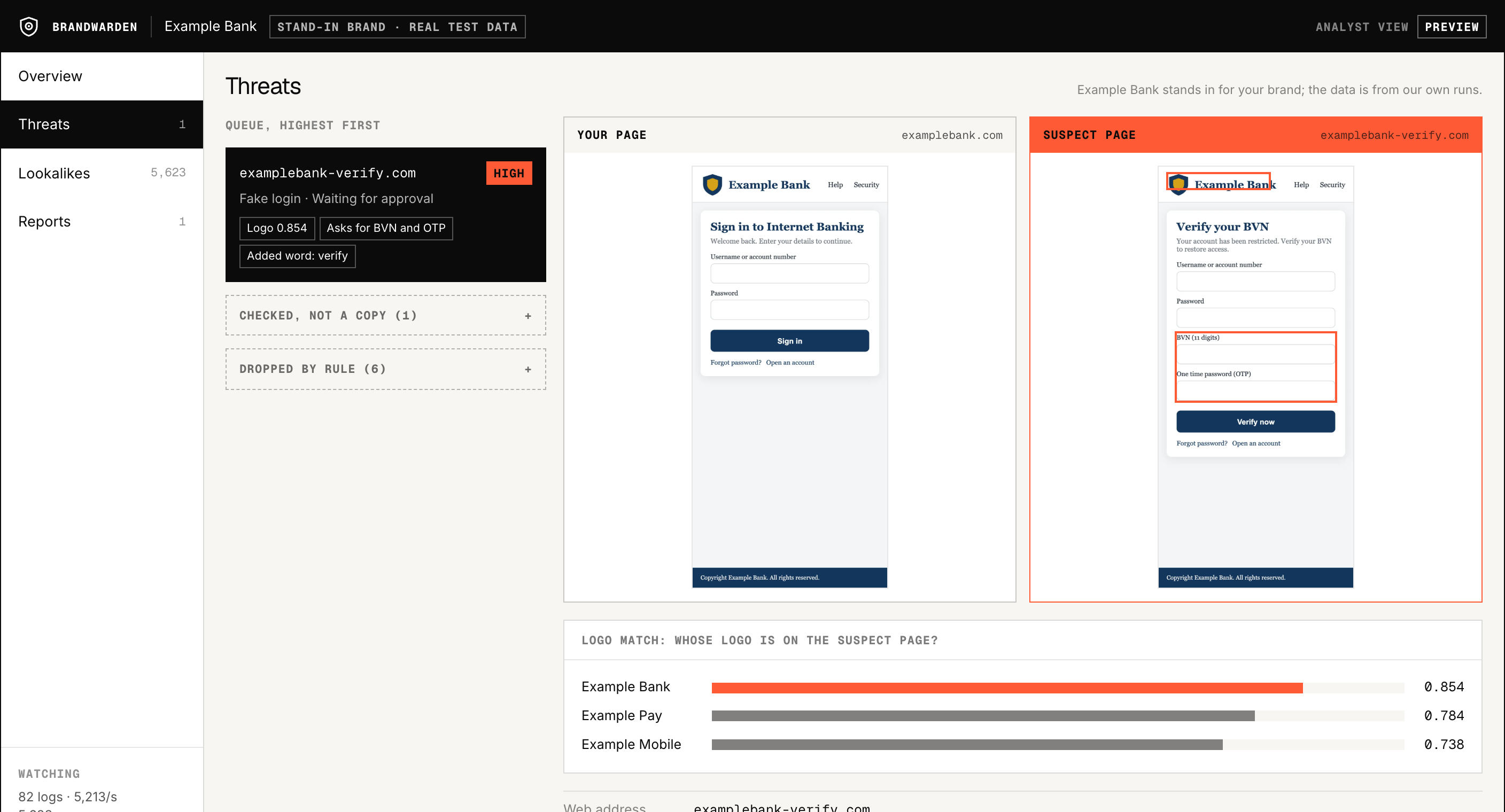
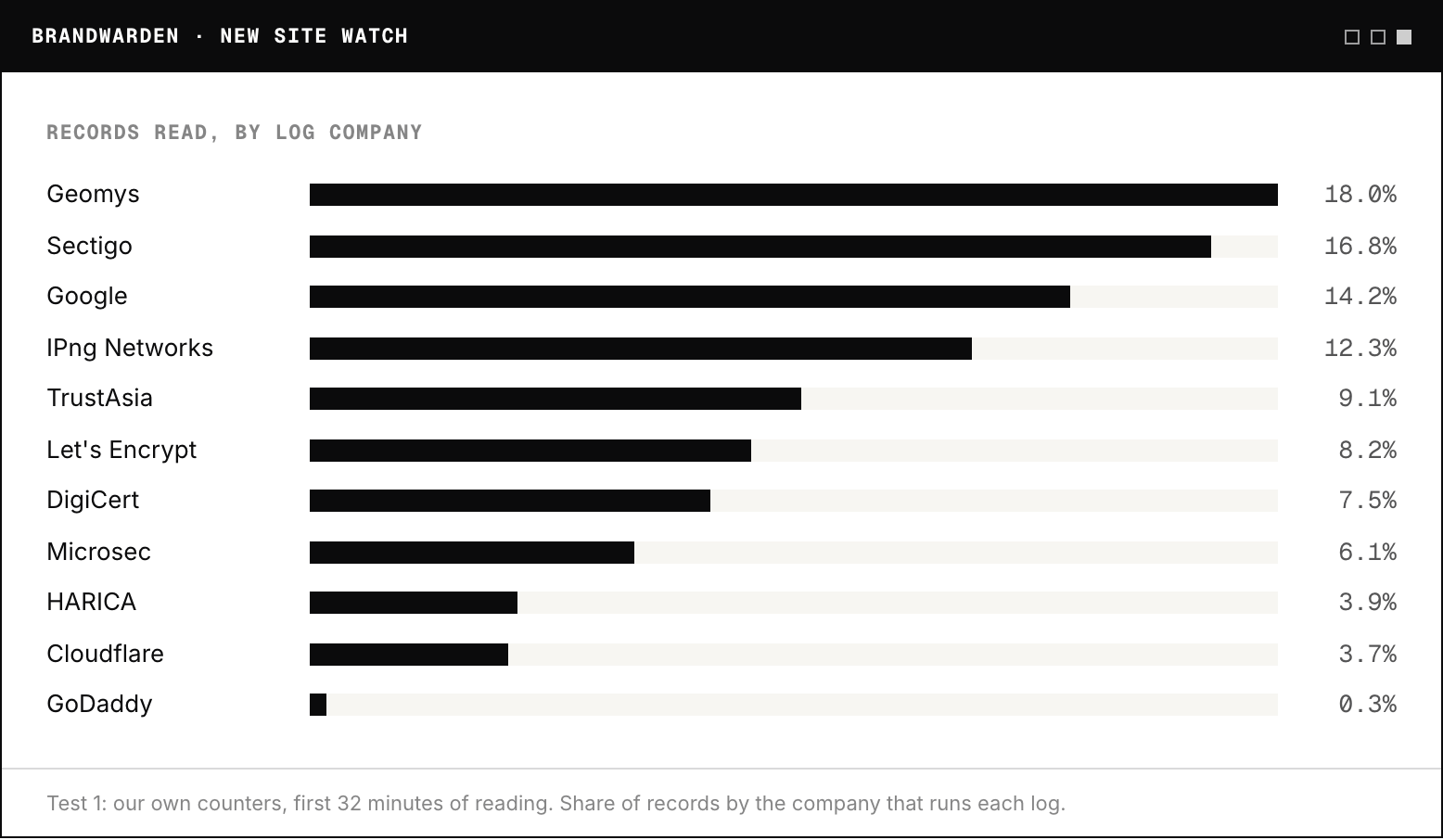
New Site Watch
Reads the public certificate logs as they grow: 5,213 records a second from 82 logs.
A new site using your name shows up the moment its padlock certificate is logged.
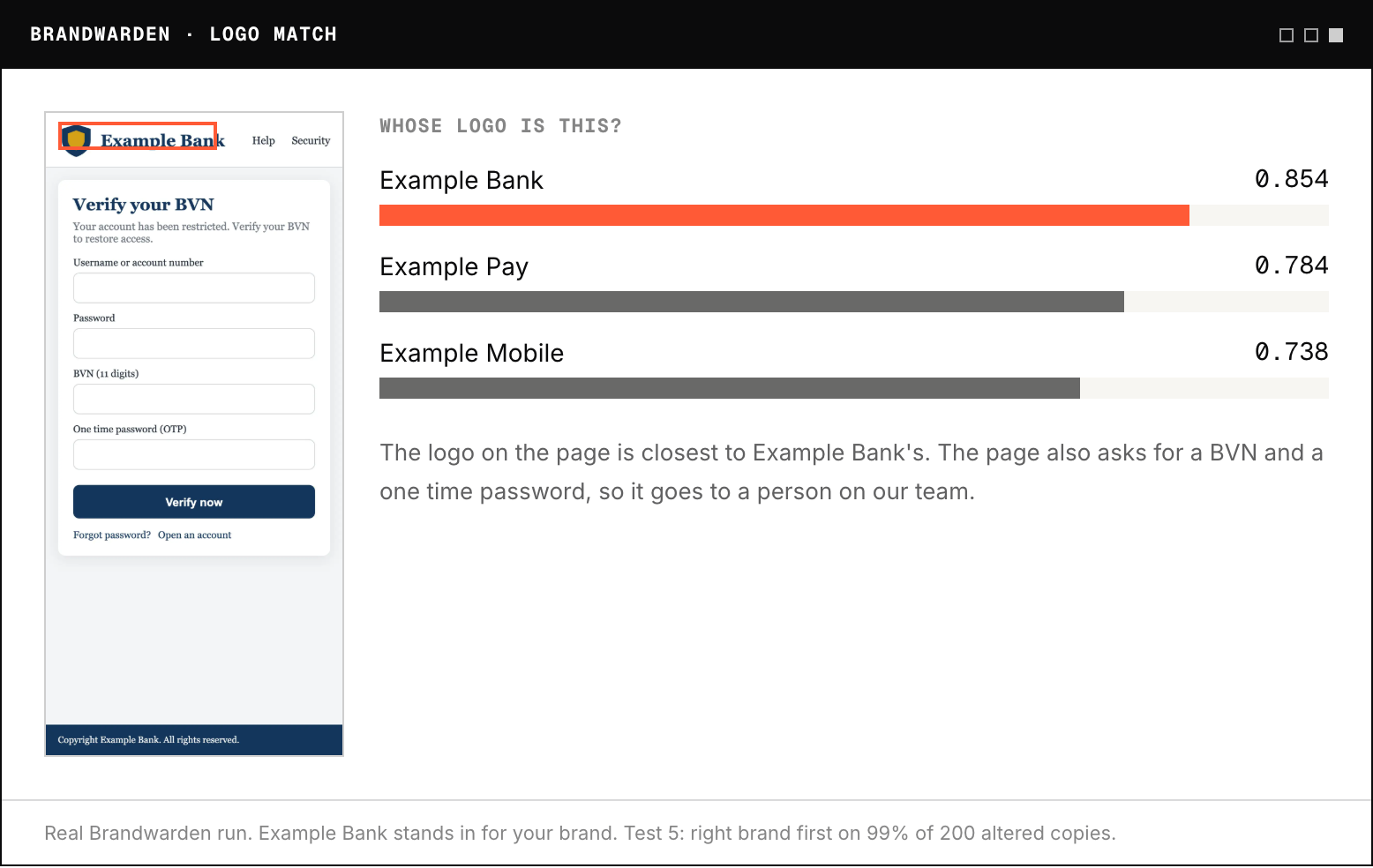
Logo Match
Cuts the logo out of a page and compares it with every brand we watch. The right brand came first on 99% of 200 altered copies.
A page with your logo and a BVN box goes straight to a person on our team.
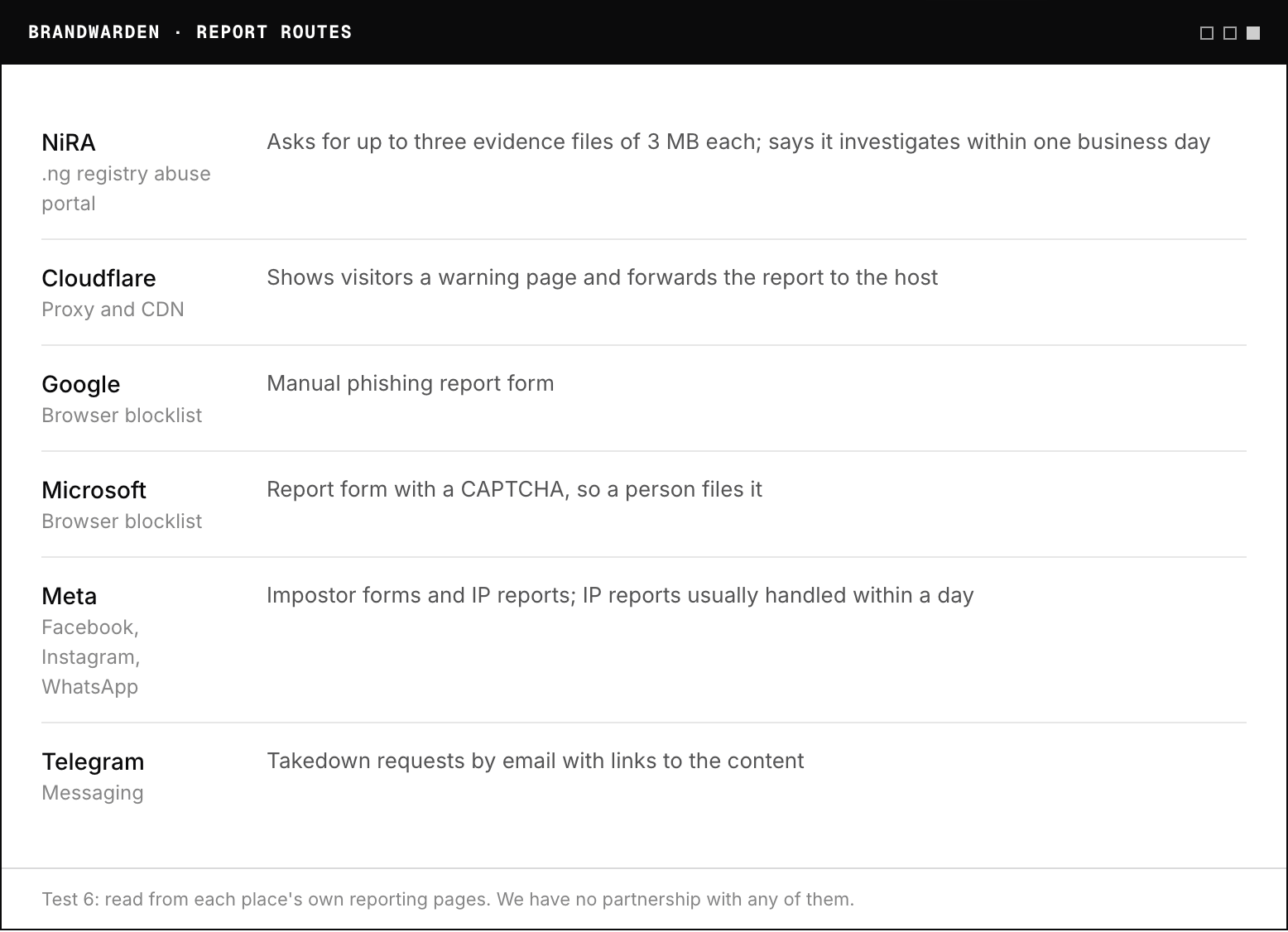
Report Routes
Holds what 6 places ask for in a report, plus the abuse routes of the 18 web hosts that carried most of the 88 live phishing pages we tested.
So each report carries the right proof the first time. We have no partnership with any of them.
Four tools, one job: find the fakes before your customers do.
Each tool below shows a real result from our own test runs.
New Site Watch
Every secure website needs a padlock certificate, and every certificate is written into public logs. New Site Watch reads all of those logs as they grow, so a new site using your name shows up as soon as its certificate is logged.
A replay at the measured rate. Each counter ticks at that company's share of 5,213 records a second.
- Geomys9,39418.0%
- Sectigo8,73916.8%
- Google7,37914.2%
- IPng Networks6,41912.3%
- TrustAsia4,7659.1%
- Let's Encrypt4,2838.2%
- DigiCert3,8887.5%
- Microsec3,1546.1%
- HARICA2,0203.9%
- Cloudflare1,9163.7%
- GoDaddy1670.3%
Your brand is copied in more places than your website.
These are the kinds of fakes your customers meet every week. Each one borrows your name, your logo or your colours.
Screens drawn by us with stand-in brands.
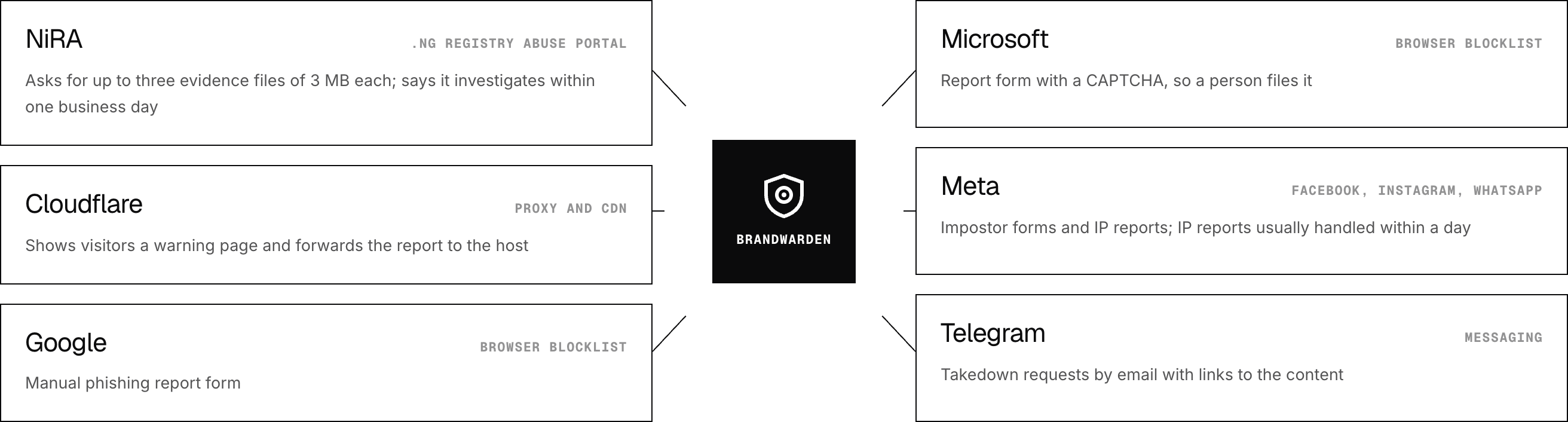
Where a fake gets reported.
Each place wants different proof. Brandwarden knows what each one asks for. Our analysts approve every takedown request before it is sent, and only for a brand that has asked us in writing.
Asks for up to three evidence files of 3 MB each; says it investigates within one business day
Shows visitors a warning page and forwards the report to the host
Manual phishing report form
Report form with a CAPTCHA, so a person files it
Impostor forms and IP reports; IP reports usually handled within a day
Takedown requests by email with links to the content
Test 6: read from each place's own reporting pages, plus the abuse routes of the 18 hosts, platforms and registrars that carried the most live phishing in test 3. Brandwarden has no partnership with any of them.
We checked 5,623 lookalikes of one bank's name and caught the fake.
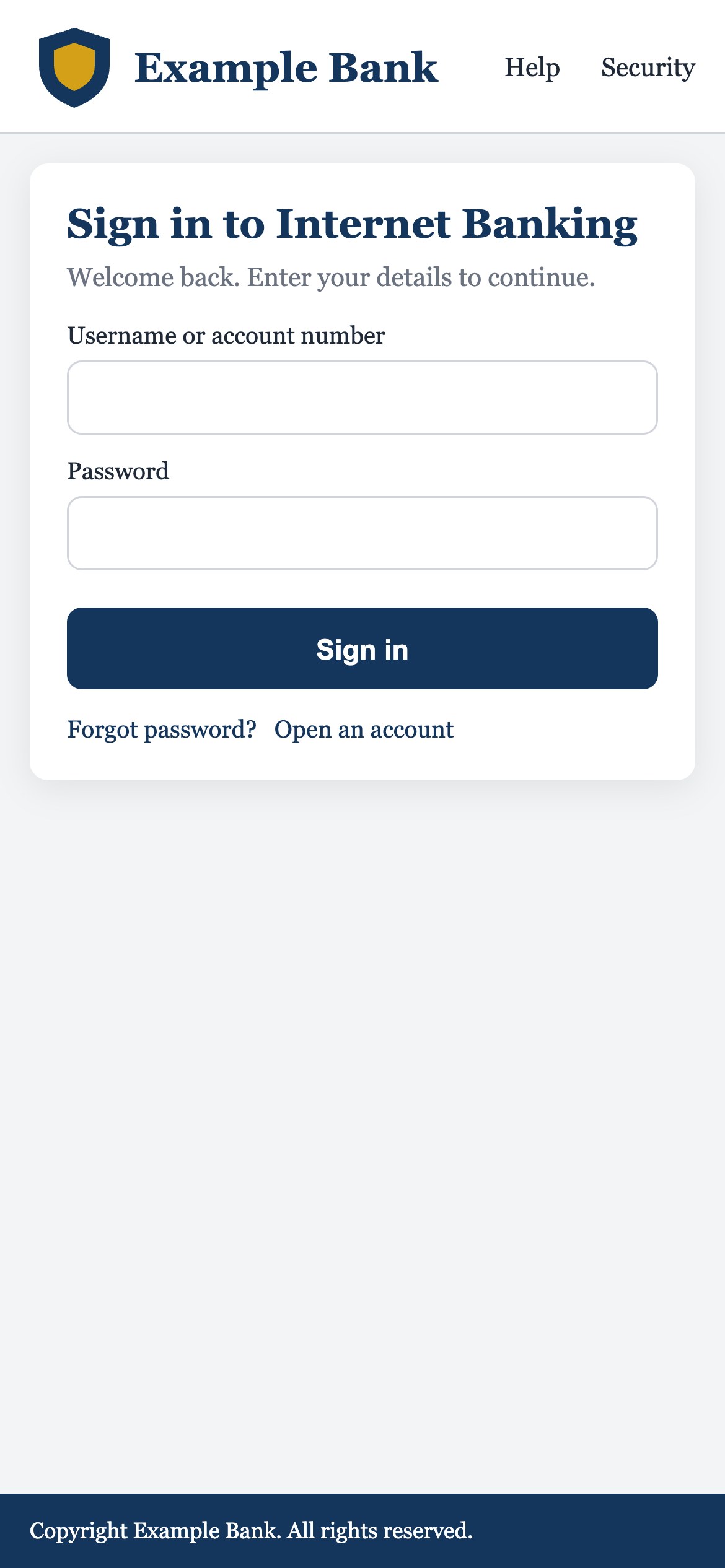
- Your pageexamplebank.comExample Bank's own login page. Our stand-in brand.
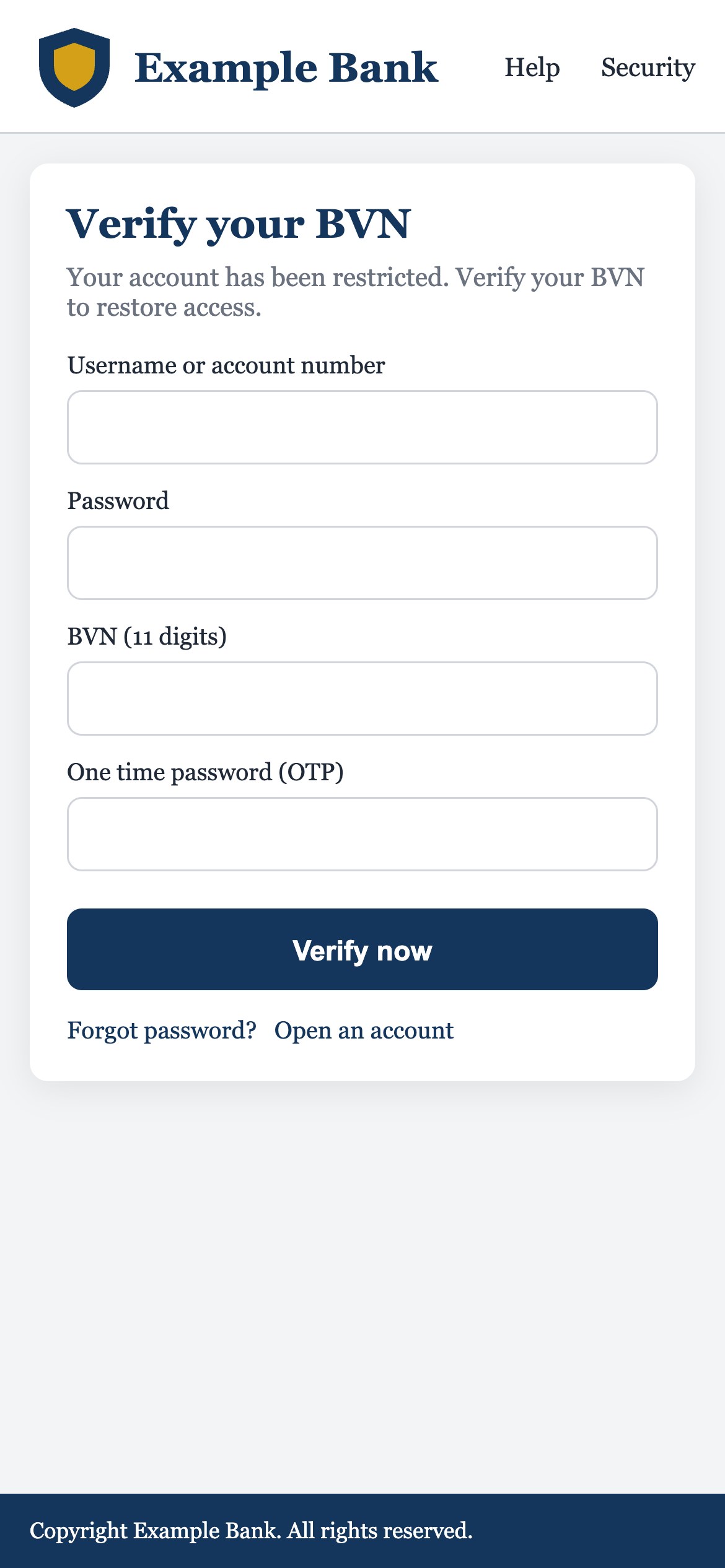
- The fakeexamplebank-verify.comA name our Lookalike Finder made. The page asks for a BVN and a one time password.Test 2
- Logo matchExample Bank 0.854The closest of three brands, ahead of Example Pay 0.784 and Example Mobile 0.738.Test 5
- Fingerprint33d3973d…ba38Fixes the capture, so any later change would show.Test 3
every name made for examplebank.com, test 2
the other 5,616 were not registered
examplebank-verify.com
waiting for a person on our team to approve
Real Brandwarden run. Example Bank stands in for your brand. The pages were drawn by us.
Every capture gets a fingerprint.
Change one pixel and the fingerprint changes. When we report a fake, the fingerprint shows our proof has not been touched. Your browser is checking one of our captures right now.
Built for brands people trust with their money.
If your customers log in, pay or share their details with you online, scammers will copy you. Brandwarden watches for them.
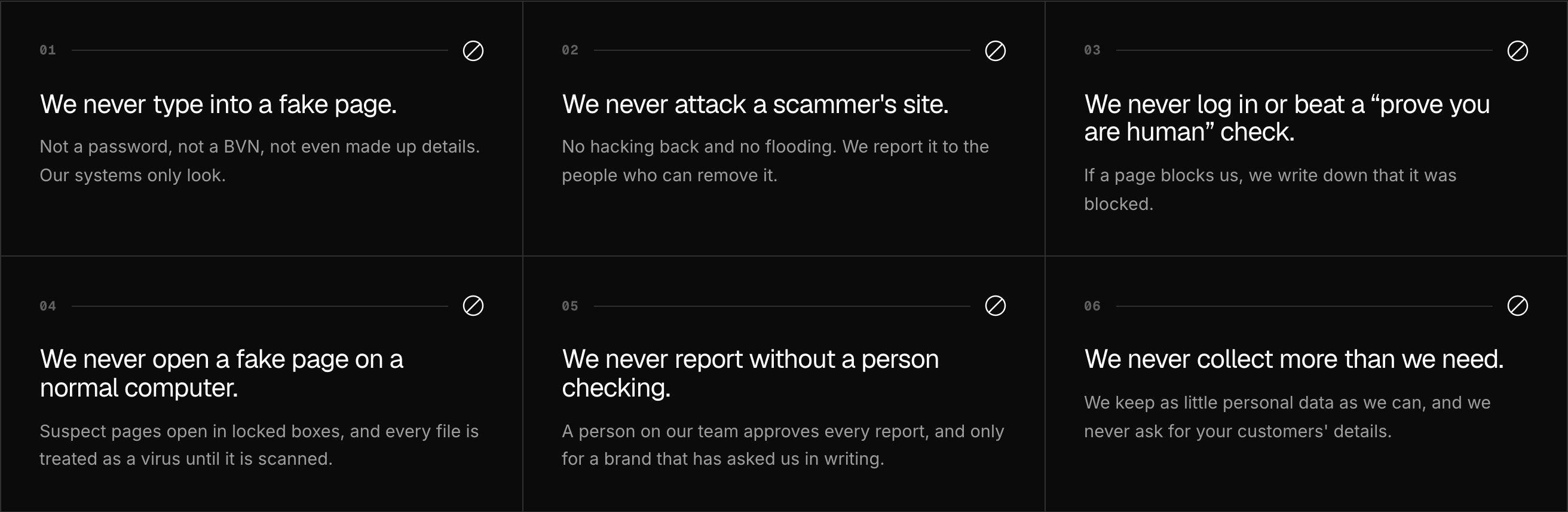
What we never do.
Protecting your customers should never put anyone else at risk. These rules are built into how Brandwarden works.
- 01We never type into a fake page.
Not a password, not a BVN, not even made up details. Our systems only look.
- 02We never attack a scammer's site.
No hacking back and no flooding. We report it to the people who can remove it.
- 03We never log in or beat a “prove you are human” check.
If a page blocks us, we write down that it was blocked.
- 04We never open a fake page on a normal computer.
Suspect pages open in locked boxes, and every file is treated as a virus until it is scanned.
- 05We never send a takedown request without an analyst.
Our analysts approve every request, and only for a brand that has asked us in writing.
- 06We never collect more than we need.
We keep as little personal data as we can, and we never ask for your customers' details.
Proven in test 3: no keystrokes, no form submissions and no logins in 1,991 page loads. Pages tried to send data on their own 3,002 times, and the locked box stopped every one.
See the testWe look from where your customers are.
Some fake pages show their trap only to visitors from one country, so we look from Lagos and from abroad. Our own test page built to do exactly that was caught from Lagos. From Lagos, a server in Nigeria answered in 16 ms; from Cape Town, the same server took 75 ms.
- Lagos--:--:--Sees a page the way your customers in Nigeria see it.15.9 ms
- Cape Town--:--:--Where our certificate reader and records live.74.8 ms
- Ireland--:--:--Sees a page the way a visitor abroad sees it.
- Round trips to a server hosted in Nigeria, test 7. Clocks show the local time in each place.
What people ask us.
What is a lookalike website?
A website with a name close to yours, like examp1ebank.com or examplebank-verify.com, made so people mistake it for you. Many are harmless. Some copy your login page to steal from your customers.
How can you see a fake so early?
To show the padlock in a browser, a website needs a certificate, and every certificate is written into public logs. We read those logs as they grow, 5,213 records a second in our test. A copy of your site shows up there as soon as it gets its padlock.
Do you take fake pages down?
Brandwarden is software your team signs in to. It finds and checks the fakes and prepares each takedown request with the proof the registry, web host or app asks for. Our analysts approve every request before it is sent, and only for a brand that has asked us in writing. The registry, host or app makes the final call.
Do you need our customer data?
No. We only look at public pages and public records. We never ask for your customers' details, and we never type anything into a fake page.
Will you name my bank on your website?
Never without your written permission. That is why the examples on this site use Example Bank, Example Pay and Example Mobile.
Who is Brandwarden for?
Banks, payment apps, telcos and insurers in Nigeria: any brand whose customers log in, pay or share their details online.
Check our work before you talk to us.
See who is copying your brand.
Tell us your brand name and we will show you the lookalike web addresses that already exist for it, and what is on them.
hello@brandwarden.cloud